



Cannabinoid Receptor
Cannabinoid Receptor
Cannabinoid receptors are currently classified into three groups: central (CB1), peripheral (CB2) and GPR55, all of which are G-protein-coupled. CB1 receptors are primarily located at central and peripheral nerve terminals. CB2 receptors are predominantly expressed in non-neuronal tissues, particularly immune cells, where they modulate cytokine release and cell migration. Recent reports have suggested that CB2 receptors may also be expressed in the CNS. GPR55 receptors are non-CB1/CB2 receptors that exhibit affinity for endogenous, plant and synthetic cannabinoids. Endogenous ligands for cannabinoid receptors have been discovered, including anandamide and 2-arachidonylglycerol.
Cannabinoid Receptor Isoform Specific Products
All Product Categories
-
Cannabinoid Receptor Inhibitors
(37)
View all products
-
Cannabinoid Receptor Agonists
(141)
View all products
-
Cannabinoid Receptor Antagonists
(76)
View all products
-
Cannabinoid Receptor Activators
(15)
View all products
-
Cannabinoid Receptor Modulators
(24)
View all products
-
Cannabinoid Receptor Chemical
(1)
View all products
-
Cannabinoid Receptor Inducer
(1)
View all products
-
Cannabinoid Receptor Degrader
(1)
View all products
-
Cannabinoid Receptor Controls
(2)
View all products
-
Cannabinoid Receptor Ligands
(13)
View all products
-
Cannabinoid Receptor Related Products (449)
Related Products (449)

-
Antibodies (1)
-
Cannabinoid Receptor Isoform Comparison
-
PROTAC CB1R Degrader-1
 0 ImagesCat. No.: HY-178176PROTAC CB1R Degrader-1 is a potent and selective CB1R PROTAC degrader that exploits the ubiquitin-proteasome system (UPS) achieving a DC50 of 3.37 μM in MCF-7 cells and showing no impact on CB2R. PROTAC CB1R Degrader-1 reduces CB1R-associated downstream signaling (p-AKT, p-ERK, BCL2, and MCM5), thereby inhibiting breast cancer cell proliferation and inducing apoptosis. PROTAC CB1R Degrader-1 can be used for breast cancer research.
-
O-1269
 0 ImagesCat. No.: HY-167865CAS No.: 336615-64-6O-1269 is a partial agonist of cannabinoid receptor 1 (CB1R) with a Ki of 32 nM. O-1269 shows analgesic effects.
-
O-2050
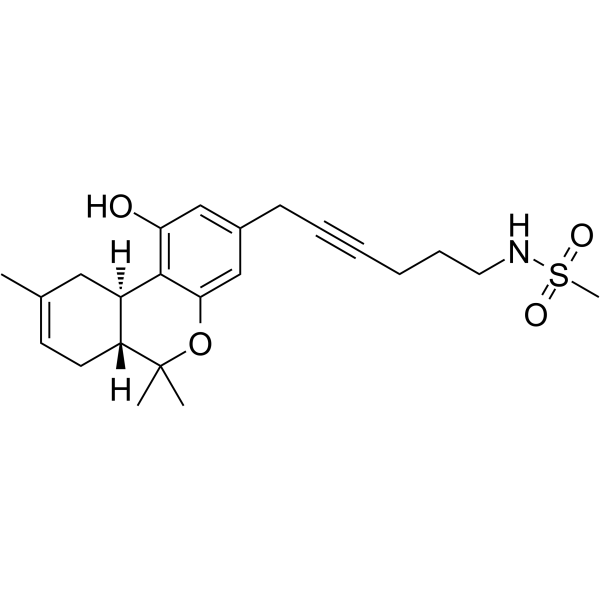 0 ImagesCat. No.: HY-133533CAS No.: 1883545-42-3O-2050 is a high affinity cannabinoid CB1 receptor antagonist with a Ki of 2.5 nM. O-2050 inhibits cannabinoid CB2 receptor (Ki=0.2 nM). O-2050 can cause locomotor stimulation in mice.
-
CB-52
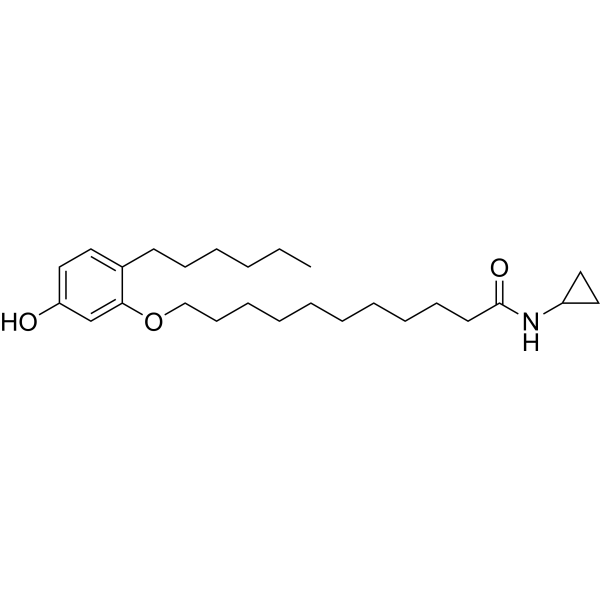 0 ImagesCat. No.: HY-121545CAS No.: 869376-90-9CB-52 is the ligand and neutral antagonist of CB2 cannabinoid receptor.
-
TRPM8 antagonist 4
 0 ImagesCat. No.: HY-174825CAS No.: 3107363-68-5TRPM8 antagonist 4 is a CB2R partial agonist (EC50=54.2 nM, Ki=3.2 μM) and TRPM8 antagonists (IC50=42.3 nM) with high functional selectivity and good physicochemical properties. TRPM8 antagonist 4 has significant anti-inflammatory and analgesic effects and good safety, reduces the mRNA expression of TNF-α, IL-6, and IL-1β.
-
CB2 receptor agonist 8
 0 ImagesCat. No.: HY-168338CB2 receptor agonist 8 (Compound 17) is an agonist for cannabinoid receptor 2 (CB2 receptor). CB2 receptor agonist 8 exhibits cytotoxicity in cells U87, RPMI 8226, HL-60, and L929 with IC50s of 91.03, 16.29, 23.51 and 564.6 μM, respectively. CB2 receptor agonist 8 activates caspase 3/7, increases the expressions of pro-apoptotic genes BAX, BAD, BIM and tumor suppressor genes p53, and induces apoptosis in U87. CB2 receptor agonist 8 inhibits the migration of U87.
-
11(Z),14(Z)-Eicosadienoic acid ethanolamide
 0 ImagesCat. No.: HY-169038CAS No.: 162758-92-111(Z),14(Z)-Eicosadienoic acid ethanolamide (Compound 3) is an ethanolamide-conjugated form of 11(Z),14(Z)-Eicosadienoic acid (HY-149589). 11(Z),14(Z)-Eicosadienoic acid ethanolamide inhibits the inactivating transport of an endogenous cannabinoid substance with an IC50 value of 10.6 μM. 11(Z),14(Z)-Eicosadienoic acid ethanolamide can be used for research of neuropsychiatric conditions.
-
CB1R agonist 1
 0 ImagesCat. No.: HY-168997CB1R agonist 1 is a potent, CNS-penetrant, and selective Cannabinoid-1 receptor (CB1R) agonist with a Ki of 0.95 nM, modulating Gi/o signaling. CB1R agonist 1 exhibits high selectivity over CB2R and other off-target GPCRs, including GPR55, GPR18, and GPR119. CB1R agonist 1 induces analgesia and hypothermia, and potentiates opioid analgesia in mice. CB1R agonist 1 can be used for the research of pain.
-
CB2 receptor antagonist 3
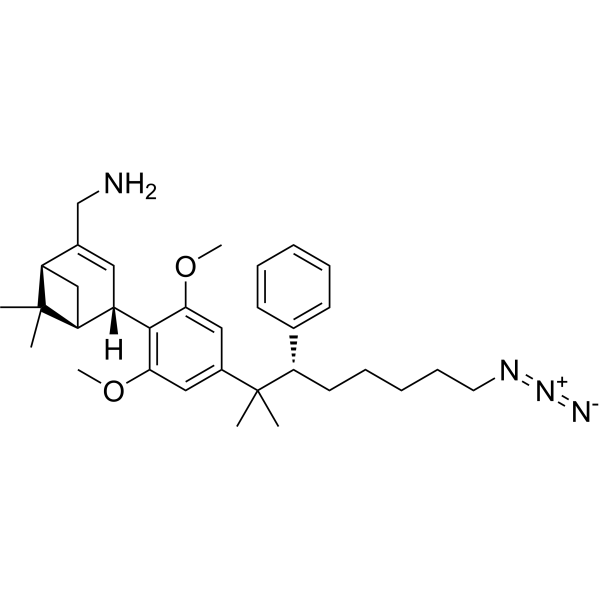 0 ImagesCat. No.: HY-155481CB2 receptor antagonist 3 (compound (S)-1) is an inverse agonist of the cannabinoid receptor CB2R with Kd=39 nM. CB2 receptor antagonist 3 can be used as a tool to synthesize a variety of CB2R probes.
-
CB1 antagonist 6
 0 ImagesCat. No.: HY-178857CB1 antagonist 6 (Compound 11jE2) is an orally active CB1R antagonist, with an IC50 value of 23 nM. CB1 antagonist 6 significantly reduces food intake and body weight, improves glucose tolerance and insulin resistance, and decreases serum ALT and AST levels in diet-induced obese (DIO) mice, demonstrating hepatoprotective effects. CB1 antagonist 6 can be used for the study of metabolic syndrome (obesity, diabetes).
-
BPR-890
 0 ImagesCat. No.: HY-14140CAS No.: 1170700-86-3BPR-890 is a potent agonist of CB1. BPR-890 exhibits excellent CB2/1 selectivity and has in vivo efficacy in diet-induced obese mouse model.
-
Neuroprotective agent 15
 0 ImagesCat. No.: HY-178943CAS No.: 2476614-40-9Neuroprotective agent 15 (Compound 3e) is a neuroprotective agent. Neuroprotective agent 15 is a selective butyrylcholinesterase (BChE) inhibitor, with IC50 values of 2.6 and 114.3 μM for BChE and AChE respectively. Neuroprotective agent 15 has cannabinoid CB2 receptor (CB2 receptor) agonistic activity. Neuroprotective agent 15 can reduce cell death, LDH release and Caspase-3/7 activity, and inhibit apoptosis. Neuroprotective agent 15 can reduce the formation of superoxide free radicals, maintain cell morphology, and significantly lower oxidative stress levels. Neuroprotective agent 15 can be used in the research of neurodegenerative diseases, such as Alzheimer's disease and Parkinson's disease.
-
OLHHA
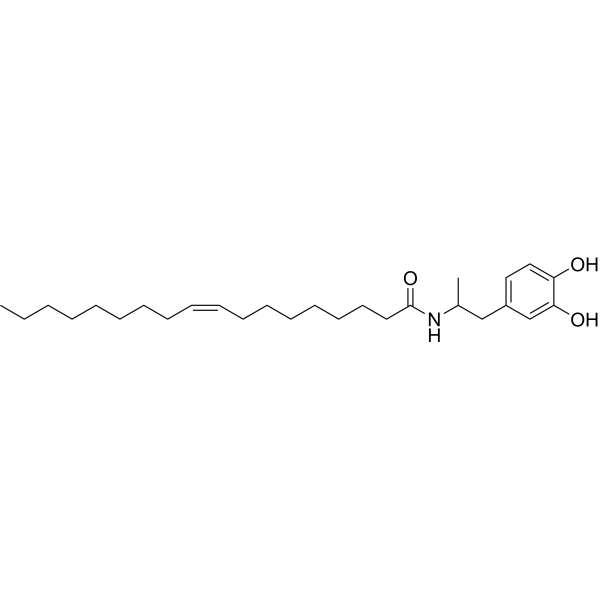 0 ImagesCat. No.: HY-139230CAS No.: 1258011-97-0OLHHA is a dual CB1 receptor antagonist and PPARα agonist. OLHHA also is a alcohol intake inhibitor with an EC50 value of 0.2 mg/kg. OLHHA reduces both hepatic lipid accumulation and circulating triglyceride levels. OLHHA shows anti-steatotic activity and has the potential for the research of non-alcoholic fatty liver disease (NAFLD).

-
CB1R Allosteric modulator 4
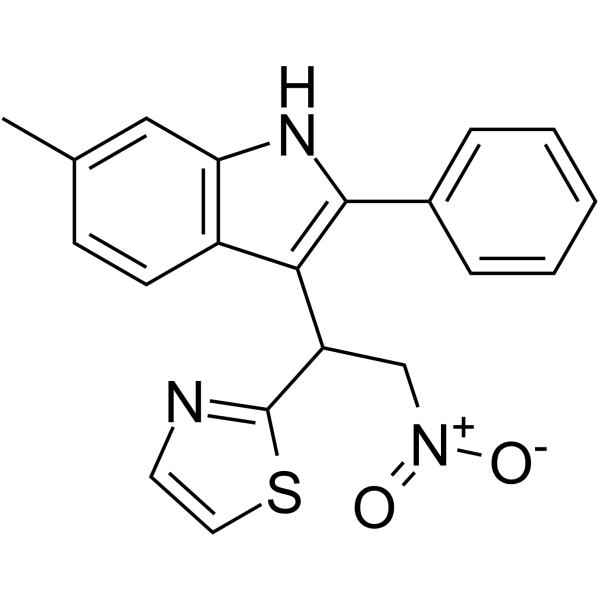 0 ImagesCat. No.: HY-150057CAS No.: 2633686-53-8CB1R Allosteric modulator 4 is a positive allosteric modulator of cannabinoid type-1 (CB1R) with good biological activity. CB1R Allosteric modulator 4 inhibits cAMP production and shows robust activity in β-arrestin-2 recruitment.
-
hBChE-IN-2
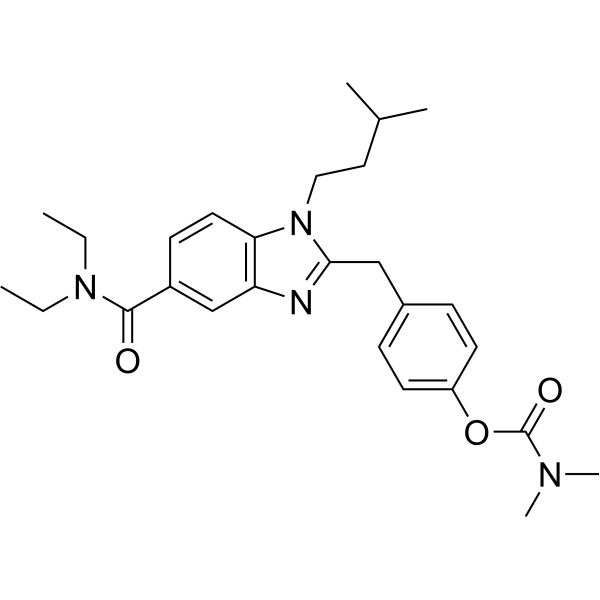 0 ImageshBChE-IN-2 (compound 15d) is a butyrylcholinesterase (BChE) inhibitor (IC50 of 0.62 μM) and a cannabinoid receptor 2 (CB2R) agonist. hBChE-IN-2 has neuroprotection activities.
-
BAY 38-7271
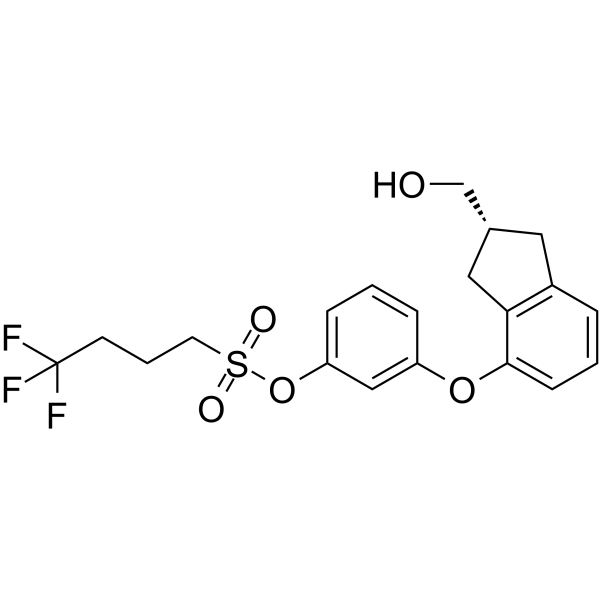 0 ImagesCat. No.: HY-119744CAS No.: 212188-60-8BAY 38-7271 is selective and highly potent and cannabinoid CB1/CB2 receptor agonist, with Kis of 1.85 nM and 5.96 nM for recombinant human CB1 receptor and CB2 receptor, respectively. BAY 38-7271 has strong neuroprotective properties.
-
CB2R-IN-1
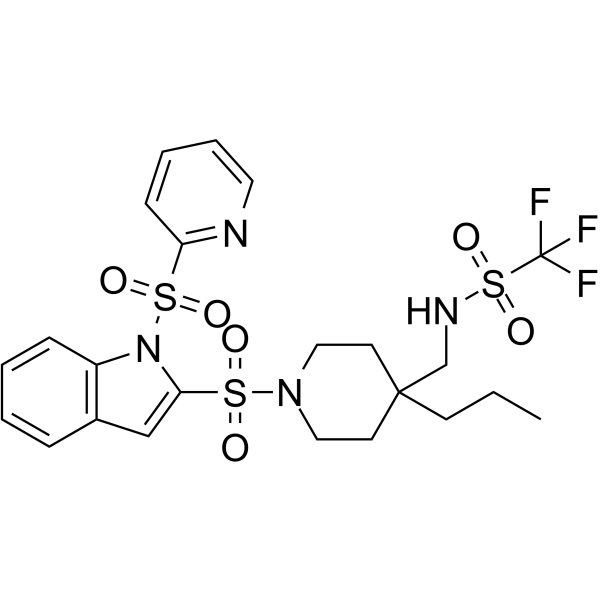 0 ImagesCat. No.: HY-100328CAS No.: 1257555-79-5CB2R-IN-1 is a potent cannabinoid CB2 receptor inverse agonist with a Ki of 0.9 nM.
-
CB1R Allosteric modulator 3
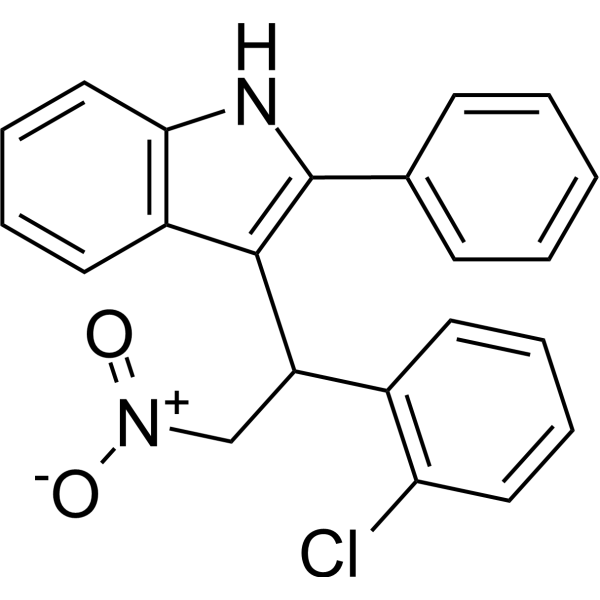 0 ImagesCB1R Allosteric modulator 3 is a CB1R positive allosteric modulator. CB1R Allosteric modulator 3 has potent inhibition of cAMP and β-Arrestin with EC50 values of 0.018 μM and 1.241 μM, respectively.
-
APP-FUBINACA
 0 ImagesCat. No.: HY-118245CAS No.: 1185282-03-4APP-FUBINACA is a cannabinoid receptor agonist and a derivative of phenylalaninamide-based indazole-3-carboxamide. APP-FUBINACA exhibits neurostimulatory effects.




